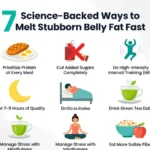

Millions of people struggle with stubborn belly fat that seems impossible to lose. You’ve probably tried countless diets and workouts, only to see the scale drop everywhere except your midsection. This frustrating experience affects nearly 70% of American adults who carry excess weight around their waist. The truth is, belly fat isn’t just about appearance. It’s one of the most dangerous types of fat your body can store. Visceral fat wraps around your internal organs and increases your risk of heart disease, diabetes, and other serious health problems. That’s why targeting this area becomes so important for your overall health. But here’s the good news. Science has revealed specific strategies that actually work to melt stubborn belly fat. These aren’t quick fixes or magic pills. They’re proven methods backed by real research and clinical studies. In this article, you’ll discover seven science-backed techniques that specifically target belly fat. Each method has been tested in laboratories and proven effective in peer-reviewed studies. You’ll learn exactly how to apply these strategies to your daily routine for maximum fat-burning results. We’ll cover everything from the surprising foods that boost your metabolism to the specific exercises that torch belly fat faster than traditional cardio. You’ll also discover how simple changes to your sleep and stress levels can dramatically accelerate your progress. By the end of this article, you’ll have a complete roadmap to finally conquer that stubborn belly fat. These aren’t temporary solutions – they’re sustainable lifestyle changes that will keep the weight off for good.
📋
📚 Table of Contents
-
1
H2: High-Intensity Interval Training (HIIT) Burns Visceral Fat -
2
H2: Intermittent Fasting Shrinks Fat Cells -
3
H2: Protein-Rich Foods Speed Up Metabolism -
4
H2: Strength Training Builds Fat-Burning Muscle -
5
H2: Quality Sleep Regulates Fat Storage Hormones -
6
H2: Stress Management Lowers Cortisol Levels
H2: High-Intensity Interval Training (HIIT) Burns Visceral Fat
This powerful workout method targets stubborn belly fat more effectively than steady cardio. Research shows HIIT can reduce visceral fat by up to 17% in just 12 weeks.
How HIIT Specifically Targets Visceral Fat
HIIT creates an oxygen debt that forces your body to burn fat for hours after exercise. This process, called EPOC (excess post-exercise oxygen consumption), continues working even while you sleep.
During intense intervals, your body releases powerful hormones like growth hormone and adrenaline. These hormones specifically target visceral fat cells around your organs. A 2017 study found participants lost 2.5 inches from their waistline in 8 weeks using HIIT.
Best HIIT Exercises for Belly Fat Loss
Compound movements that engage your core deliver the biggest impact. These exercises work multiple muscle groups while torching calories:
- Burpees – Full-body movement that spikes heart rate instantly
- Mountain climbers – Targets core while maintaining high intensity
- Jump squats – Builds leg power and burns massive calories
- High knees – Simple but effective for beginners
- Plank jacks – Combines core stability with cardio
Sample HIIT Workout Structure
Start with a simple 15-minute routine three times per week. Work at maximum effort for 30 seconds, then rest for 90 seconds.
Week 1-2: Focus on proper form with 4-5 exercises. Week 3-4: Increase work periods to 45 seconds. Advanced practitioners can try 60 seconds of work with only 30 seconds rest.
Sarah, a 34-year-old teacher, lost 3 inches from her waist using this exact progression. She combined HIIT with proper nutrition and saw results within the first month.
H2: Intermittent Fasting Shrinks Fat Cells
Your body starts breaking down fat cells when you stop eating for extended periods. This process happens faster than most people realize.
How Fat Cells Actually Shrink During Fasting
When you fast for 12-16 hours, your insulin levels drop significantly. Low insulin tells your body to start using stored fat for energy instead of glucose.
Your fat cells contain triglycerides that get broken down into fatty acids. These fatty acids enter your bloodstream and travel to muscles and organs for fuel. The fat cells literally get smaller as they release their contents.
Studies show that belly fat responds particularly well to this process. Visceral fat around your organs breaks down faster than subcutaneous fat under your skin.
The 16-Hour Sweet Spot for Maximum Fat Loss
Most fat burning happens between hours 12-16 of your fast. Before hour 12, your body still uses stored carbohydrates for energy.
After 16 hours, fat burning reaches peak efficiency. Your liver starts producing ketones from broken-down fat cells. These ketones become your brain’s preferred fuel source.
A typical 16:8 schedule means eating between noon and 8 PM. This gives you a full 16-hour fat-burning window while you sleep and work.
Why Belly Fat Disappears First
Visceral belly fat has more beta-receptors than other fat areas. These receptors respond quickly to hormonal changes during fasting.
Your body prioritizes burning belly fat because it’s metabolically active. This fat releases inflammatory compounds that your body wants to eliminate first.
Many people notice their waistline shrinking within 2-3 weeks of consistent intermittent fasting. The scale might not change much, but clothes fit better as fat cells compress.
Measuring Your Fat Cell Changes
Track your progress with a measuring tape around your waist. Take measurements at the same time each morning before eating.
Body composition scales can show fat percentage changes over time. Look for trends over weeks, not daily fluctuations.
Progress photos reveal changes that numbers can’t capture. Take front and side photos in the same lighting every two weeks.
H2: Protein-Rich Foods Speed Up Metabolism
Your body burns extra calories just to digest protein. This process creates a powerful fat-burning advantage that many people overlook.
How Protein Burns More Calories During Digestion
Protein requires 20-30% more energy to digest compared to carbs or fats. This means eating 100 calories of chicken actually costs your body about 25-30 calories to process.
Your digestive system works harder to break down protein molecules. This extra work creates heat and burns calories for hours after eating. Scientists call this the thermic effect of food.
Best High-Protein Foods for Belly Fat Loss
Lean proteins deliver the biggest metabolic boost without excess calories. Focus on these proven fat-burning options:
- Chicken breast – 25 grams protein per 3 oz serving
- Greek yogurt – 20 grams protein per cup
- Salmon – 22 grams protein plus healthy fats
- Eggs – 6 grams protein per egg with all essential amino acids
- Lean beef – 26 grams protein per 3 oz serving
Timing Your Protein for Maximum Fat Burning
Eating protein at breakfast kickstarts your metabolism for the entire day. Studies show people who eat 30 grams of protein at breakfast burn 400 more calories throughout the day.
Spread protein across all meals to keep your metabolic fire burning. Aim for 20-30 grams per meal rather than loading up at dinner only.
How Much Protein You Need Daily
Most adults need 0.8-1.2 grams per pound of body weight for optimal fat burning. A 150-pound person should target 120-180 grams daily.
Track your intake for one week to see your current habits. Many people eat enough protein but consume it all at dinner instead of spreading it out.
H2: Strength Training Builds Fat-Burning Muscle
Many people think cardio is the only way to burn belly fat. However, strength training creates a powerful fat-burning engine that works around the clock.
How Muscle Tissue Burns More Calories
Muscle tissue is metabolically active, meaning it burns calories even when you’re sleeping. One pound of muscle burns about 6-7 calories per day at rest. Fat tissue only burns 2-3 calories per day.
When you build muscle through strength training, you increase your resting metabolic rate. This means your body burns more calories throughout the entire day. Even watching TV becomes a fat-burning activity.
The Afterburn Effect From Weight Training
Strength training creates something called excess post-exercise oxygen consumption (EPOC). Your body continues burning extra calories for up to 24 hours after your workout ends.
A study showed that people burned an additional 190 calories in the 14 hours following a weight training session. This afterburn effect doesn’t happen with steady-state cardio like walking or jogging.
Best Strength Exercises for Belly Fat Loss
Compound movements work multiple muscle groups and burn the most calories. These exercises also strengthen your core while building overall muscle mass.
- Deadlifts – Work your entire posterior chain and core
- Squats – Build leg muscles while engaging your abs
- Pull-ups – Strengthen your back and arms simultaneously
- Push-ups – Target chest, shoulders, and core muscles
- Planks – Directly strengthen deep abdominal muscles
Creating an Effective Strength Training Schedule
Aim for 2-3 strength training sessions per week. Allow at least one day of rest between sessions for muscle recovery. Start with bodyweight exercises if you’re new to strength training.
Focus on progressive overload by gradually increasing weight, reps, or sets. Track your workouts to ensure consistent improvement. Even small increases in strength lead to better fat-burning results over time.
H2: Quality Sleep Regulates Fat Storage Hormones
Your body’s hormone balance changes dramatically when you don’t get enough sleep. These shifts directly impact where your body stores fat, especially around your midsection.
How Sleep Deprivation Triggers Fat Storage
Poor sleep disrupts two key hormones that control hunger and fat storage. Ghrelin increases when you’re tired, making you crave high-calorie foods. Meanwhile, leptin decreases, so your brain doesn’t get the “I’m full” signal.
Studies show that people who sleep less than 6 hours nightly have 30% higher ghrelin levels. This hormone imbalance leads to late-night snacking and poor food choices. Your body also produces more cortisol, which specifically promotes belly fat accumulation.
The Insulin Connection to Belly Fat
Sleep loss makes your cells resistant to insulin, your body’s fat-storage hormone. When insulin doesn’t work properly, your body stores more calories as fat instead of using them for energy.
Research from the University of Chicago found that just 4 nights of poor sleep reduced insulin sensitivity by 30%. This means your body struggles to process carbohydrates effectively. The excess glucose gets converted to fat and stored primarily in your abdominal area.
Growth Hormone and Overnight Fat Burning
Your body releases growth hormone during deep sleep phases, typically between 10 PM and 2 AM. This hormone helps break down fat cells and build lean muscle tissue.
Without adequate deep sleep, growth hormone production drops by up to 50%. Your metabolism slows down significantly during the day. Here’s what happens when growth hormone levels are optimal:
- Increased fat burning during rest periods
- Better muscle recovery and development
- Improved metabolic rate throughout the day
- Enhanced cellular repair processes
Getting 7-9 hours of quality sleep helps restore these hormone levels naturally. Your body can then effectively regulate fat storage and burning processes.
H2: Stress Management Lowers Cortisol Levels
High stress levels trigger your body to produce excess cortisol. This hormone directly promotes belly fat storage, especially around your midsection.
How Cortisol Creates Belly Fat
When you’re stressed, cortisol tells your body to store energy as fat. It specifically targets your abdominal area because that’s where your body prefers to keep emergency fuel reserves.
Studies show that people with chronic stress have 30% more visceral fat than those with lower stress levels. This type of fat wraps around your internal organs and creates that stubborn belly bulge.
Simple Stress-Busting Techniques
You don’t need expensive treatments to lower cortisol naturally. These proven methods work within just a few weeks of consistent practice.
- Deep breathing exercises – Just 5 minutes daily can reduce cortisol by 25%
- Regular meditation – Even 10-minute sessions show measurable results
- Progressive muscle relaxation – Tense and release each muscle group for 5 seconds
- Nature walks – Outdoor time naturally lowers stress hormones
Sleep Quality Affects Cortisol Production
Poor sleep creates a vicious cycle with cortisol and belly fat. When you don’t get enough rest, your cortisol stays elevated throughout the day.
Aim for 7-8 hours of quality sleep each night. Keep your bedroom cool and dark. Avoid screens for at least one hour before bedtime to help your cortisol levels drop naturally.
Quick Daily Habits That Work
Small changes in your routine can make a big difference. Sarah, a busy mom, reduced her belly fat by 3 inches in two months just by adding these habits.
- Listen to calming music during your commute
- Take three deep breaths before each meal
- Stretch for 2 minutes every hour at work
- Write down three things you’re grateful for each morning
Conclusion
## Conclusion Getting rid of belly fat requires a complete approach that targets your body from multiple angles. The strategies we covered work together to create powerful fat-burning results. HIIT workouts torch visceral fat while building cardiovascular strength. Intermittent fasting helps shrink stubborn fat cells naturally. Protein-rich foods keep your metabolism running high all day long. Strength training builds lean muscle that burns calories even while you rest. Quality sleep keeps your hormones balanced and prevents fat storage. Managing stress lowers cortisol levels that cause belly fat to stick around. The key is consistency with these proven methods. You don’t need to do everything perfectly right away. Start with one or two strategies that feel manageable. Add more techniques as they become habits. Small changes add up to big results over time. Remember that belly fat didn’t appear overnight, and it won’t disappear overnight either. Stay patient with the process. Focus on how you feel rather than just the scale. Your energy will improve, your clothes will fit better, and your confidence will grow. Your journey to a flatter belly starts with your very next choice. Make it count.