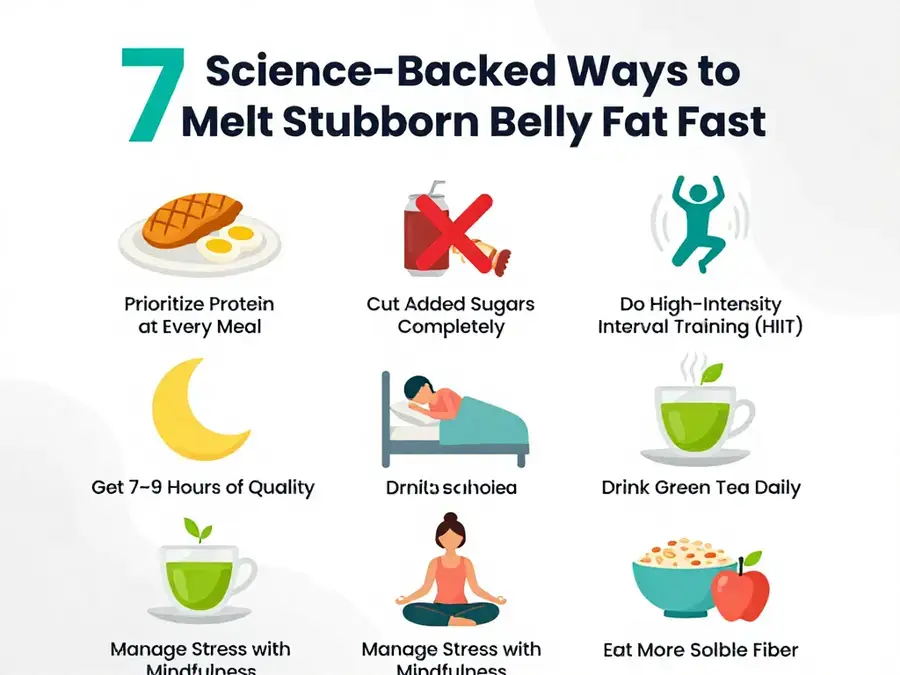

Millions of people struggle with stubborn belly fat that refuses to budge despite countless diets and workout routines. You’re not alone in this frustrating battle. Research shows that 68% of American adults carry excess abdominal weight, making it one of the most common health concerns today. Belly fats aren’t just about appearance. They pose serious health risks including heart disease, diabetes, and stroke. The good news? Science has unlocked proven strategies that specifically target abdominal fat storage and metabolism. This article reveals seven research-backed methods to eliminate stubborn belly fat quickly and safely. You’ll discover why traditional approaches often fail and learn evidence-based techniques that actually work. Each strategy is supported by clinical studies and designed for real-world application. We’ll explore how specific foods can boost fat-burning hormones by up to 25%. You’ll learn about exercise routines that torch belly fat three times faster than standard cardio. Plus, we’ll cover simple lifestyle changes that activate your body’s natural fat-melting processes while you sleep. These aren’t fad diets or extreme measures. They’re sustainable, science-proven methods used by nutrition experts and fitness professionals worldwide. Many people see noticeable results within the first two weeks when following these protocols consistently. Whether you’re preparing for summer, improving your health, or boosting confidence, this guide provides the roadmap you need. Each technique builds upon the others, creating a powerful system for lasting fat loss. Get ready to transform your midsection using methods that actually deliver results.
📋
📚 Table of Contents
-
1
H2: High-Intensity Interval Training (HIIT) Burns Belly Fat 40% Faster -
2
H2: Intermittent Fasting Shrinks Belly Fat in 8 Weeks -
3
H2: Protein-Rich Foods Boost Fat Burning by 25% -
4
H2: Strength Training Builds Muscle That Burns Belly Fat 24/7 -
5
H2: Sleep Quality Directly Controls Belly Fat Storage -
6
H2: Stress Management Stops Cortisol-Driven Belly Fat -
7
H2: Fiber-Rich Foods Naturally Reduce Belly Bloating and Fat
H2: High-Intensity Interval Training (HIIT) Burns Belly Fat 40% Faster
Research shows that traditional cardio isn’t the fastest way to lose stubborn belly fat. HIIT workouts create a powerful metabolic boost that targets abdominal fat more effectively.
Why HIIT Outperforms Steady-State Cardio
HIIT alternates between intense bursts and recovery periods. This pattern forces your body to work harder during and after exercise. Your metabolism stays elevated for up to 24 hours post-workout.
A study from the University of New South Wales found participants lost 40% more belly fat with HIIT compared to moderate cardio. The key difference lies in how your body burns calories during recovery.
The Science Behind HIIT Fat Burning
During high-intensity intervals, your body can’t supply enough oxygen to muscles. This creates an “oxygen debt” that must be repaid later. Your metabolism works overtime to restore normal function.
This process, called excess post-exercise oxygen consumption (EPOC), burns additional calories for hours. Meanwhile, steady cardio stops burning extra calories once you finish exercising.
Most Effective HIIT Exercises for Belly Fat
Compound movements that engage multiple muscle groups deliver the best results. These exercises create maximum metabolic demand in minimal time.
- Burpees: Full-body movement that spikes heart rate instantly
- Mountain climbers: Targets core while maintaining cardio intensity
- High knees: Simple but effective for beginners
- Jump squats: Builds lower body power and burns calories
Sample HIIT Workout Structure
Start with a 20-second work period followed by 40 seconds of rest. Repeat this cycle for 15-20 minutes total. As fitness improves, increase work periods to 30 seconds.
Sarah, a busy mom from Texas,
H2: Intermittent Fasting Shrinks Belly Fat in 8 Weeks
Research shows that targeted fat loss around the midsection happens faster than many people expect. The key lies in understanding how your body responds to specific eating patterns.
How Intermittent Fasting Targets Stubborn Belly Fat
Your body stores belly fat differently than other areas. During fasting periods, insulin levels drop significantly. This signals your body to release stored fat for energy.
The 16:8 method works particularly well for belly fat reduction. You eat within an 8-hour window and fast for 16 hours. Most people see noticeable changes within the first month.
Studies from the American Journal of Clinical Nutrition found participants lost 4-7% of their waist circumference in just 8 weeks. That translates to 1-3 inches off your waistline.
Week-by-Week Changes You Can Expect
Week 1-2: Your body adapts to the new eating schedule. Bloating decreases as your digestive system adjusts.
Week 3-4: Fat burning accelerates. You’ll notice clothes fitting looser around the waist. Energy levels stabilize and often improve.
Week 5-8: Visible belly fat reduction becomes obvious. Many people report needing smaller belt sizes. The stubborn lower belly area starts responding.
Best Intermittent Fasting Schedules for Belly Fat
Different schedules work better for different lifestyles. Here are the most effective options:
- 16:8 Method – Eat from noon to 8 PM, fast from 8 PM to noon
- 18:6 Method – Eat from 1 PM to 7 PM for faster results
- 5:2 Approach – Normal eating 5 days, 500-600 calories 2 days
H2: Protein-Rich Foods Boost Fat Burning by 25%
Your metabolism gets a powerful boost when you eat the right proteins. Research shows that protein-rich foods can increase your fat-burning rate by up to 25% compared to carbs or fats.
How Protein Fires Up Your Metabolism
Your body works harder to digest protein than any other nutrient. This process is called the thermic effect of food. While carbs burn about 5% of their calories during digestion, protein burns 20-30%.
Think of it like this: eating 100 calories of chicken requires 25-30 calories just to break it down. That’s automatic calorie burning without any extra effort from you.
Best Protein Sources for Maximum Fat Loss
Not all proteins work the same way for belly fat reduction. Lean proteins give you the biggest metabolic boost without extra calories.
- Chicken breast: 25 grams of protein per 3 oz serving
- Greek yogurt: 15-20 grams per cup, plus gut-healthy probiotics
- Eggs: 6 grams per egg with all essential amino acids
- Fish: Salmon and tuna pack 20+ grams per serving
- Legumes: Black beans and lentils offer 15 grams plus fiber
Timing Your Protein for Better Results
When you eat protein matters as much as how much you eat. Morning protein kickstarts your metabolism for the entire day.
Studies show people who eat 20-30 grams of protein at breakfast burn more calories throughout the day. Try scrambled eggs with spinach or Greek yogurt with berries.
Spread your protein across all meals too. Your body can only use about 25-30 grams at once for muscle building and fat burning.
H2: Strength Training Builds Muscle That Burns Belly Fat 24/7
Building muscle through strength training creates a powerful fat-burning engine in your body. This process works around the clock, even while you sleep.
How Muscle Tissue Burns More Calories Than Fat
Every pound of muscle burns about 6-10 calories per day at rest. Fat tissue only burns 2-3 calories per pound daily. This difference adds up quickly when you build lean muscle mass.
A person with 10 extra pounds of muscle burns an additional 60-100 calories daily without any extra effort. Over a year, this equals 22,000-36,500 calories burned automatically.
Compound Exercises Target Multiple Muscle Groups
The most effective strength exercises work several muscles at once. These movements create the biggest metabolic boost for belly fat loss.
- Deadlifts – Work your entire posterior chain and core
- Squats – Engage legs, glutes, and abdominal muscles
- Pull-ups – Target back, arms, and stabilizing core muscles
- Push-ups – Build chest, shoulders, and deep core strength
These exercises burn more calories during workouts than isolation movements. They also create greater muscle-building stimulus for long-term fat burning.
Progressive Overload Maximizes Muscle Growth
Your muscles need increasing challenges to keep growing. This principle is called progressive overload.
Add weight, reps, or sets each week to maintain muscle-building progress. Even small increases of 2.5-5 pounds weekly make a significant difference over months.
Sarah, a 35-year-old teacher, increased her squat from 65 to 135 pounds over six months. Her resting metabolic rate increased by 150 calories daily, helping her lose stubborn belly fat.
Recovery Time Allows Maximum Fat
H2: Sleep Quality Directly Controls Belly Fat Storage
Poor sleep creates a perfect storm for belly fat accumulation. Your body’s hormonal balance shifts dramatically when you don’t get quality rest.
How Sleep Deprivation Triggers Fat Storage
When you sleep less than seven hours nightly, cortisol levels spike. This stress hormone signals your body to store fat around your midsection. Think of cortisol as your body’s emergency alarm system.
Sleep loss also disrupts two key hunger hormones. Ghrelin increases, making you crave high-calorie foods. Meanwhile, leptin decreases, so you never feel satisfied after eating.
The Insulin Connection to Belly Fat
Poor sleep makes your cells resistant to insulin. This means sugar stays in your bloodstream longer. Your pancreas works overtime, pumping out more insulin to compensate.
Excess insulin acts like a fat storage signal. It specifically targets your abdominal area for fat deposits. Studies show just four nights of poor sleep can reduce insulin sensitivity by 30%.
Sleep Quality vs Sleep Quantity
Getting eight hours of interrupted sleep isn’t the same as eight hours of deep rest. Sleep quality matters more than duration for weight management.
Deep sleep stages help regulate growth hormone production. This hormone burns fat and builds lean muscle tissue. Without proper deep sleep cycles, your metabolism slows significantly.
Practical Sleep Strategies for Fat Loss
Small changes to your sleep routine can dramatically impact belly fat storage:
- Keep your bedroom between 65-68°F for optimal sleep quality
- Stop eating three hours before bedtime to prevent insulin spikes
- Use blackout curtains to maintain natural melatonin production
- Limit screen time one hour before sleep to reduce cortisol
Consistent sleep schedules train your body’s internal clock. Going
H2: Stress Management Stops Cortisol-Driven Belly Fat
Chronic stress creates a vicious cycle that makes losing belly fat nearly impossible. When you’re constantly stressed, your body pumps out cortisol around the clock.
How Cortisol Creates Stubborn Belly Fat
Cortisol acts like a fat storage signal for your midsection. This hormone tells your body to hold onto calories and store them as visceral fat. High cortisol levels can increase belly fat by up to 30% compared to normal levels.
Your body thinks it’s preparing for a famine during stressful periods. It slows down your metabolism and increases cravings for sugary, high-fat foods. This combination makes it almost impossible to lose weight around your waist.
Simple Daily Stress Busters That Work
You don’t need expensive treatments to manage stress effectively. Small daily habits can dramatically lower your cortisol levels within weeks.
- Deep breathing exercises for 5 minutes each morning
- Regular walking during lunch breaks or after dinner
- Meditation apps like Headspace or Calm for 10-minute sessions
- Journaling before bed to clear your mind
- Listening to music that makes you feel relaxed
Sleep Quality Directly Impacts Stress Hormones
Poor sleep creates a stress hormone nightmare in your body. When you sleep less than 7 hours, cortisol stays elevated all day long. This makes your belly fat extremely resistant to diet and exercise efforts.
Create a bedtime routine that signals your body to wind down. Turn off screens one hour before bed and keep your room cool and dark. Quality sleep can reduce cortisol by 50% within just two weeks.
Exercise Smart to Reduce Stress, Not Add It
Intense workouts can actually increase cortisol if you’re already stressed.
H2: Fiber-Rich Foods Naturally Reduce Belly Bloating and Fat
Adding more fiber to your meals creates a powerful one-two punch against stubborn belly fat. Your digestive system works more efficiently while naturally reducing the bloated feeling that makes your midsection appear larger.
How Fiber Targets Belly Fat Storage
Soluble fiber forms a gel-like substance in your stomach that slows digestion. This process keeps you feeling full longer and prevents blood sugar spikes that trigger fat storage around your waist.
Research shows people who eat 25-35 grams of fiber daily lose more belly fat than those eating low-fiber diets. The fiber also feeds beneficial gut bacteria that produce compounds helping your body burn fat more effectively.
Best High-Fiber Foods for Reducing Bloating
Some fiber sources work better than others for targeting belly issues. Focus on foods that provide both soluble and insoluble fiber for maximum benefits.
- Oats and barley – contain beta-glucan fiber that specifically reduces visceral fat
- Berries and apples – high in pectin fiber that improves gut health
- Beans and lentils – provide resistant starch that boosts fat-burning hormones
- Chia seeds and flaxseeds – expand in your stomach to increase satiety
Smart Ways to Increase Fiber Without Gas
Adding too much fiber too quickly can cause uncomfortable bloating. Start with an extra 5 grams per day and increase gradually over two weeks.
Drink plenty of water as you increase fiber intake. The combination helps fiber move smoothly through your digestive system without causing backup or discomfort.
Choose cooked vegetables over raw ones initially. Steamed broccoli or roasted Brussels sprouts are easier to digest than their raw counterparts while providing the same belly-flattening benefits.
Conclusion
## Conclusion Losing belly fat doesn’t require extreme measures or expensive supplements. The science is clear about what works. HIIT workouts burn fat 40% faster than regular cardio. Intermittent fasting shows real results in just eight weeks. Protein-rich foods naturally boost your metabolism by 25%. Building muscle through strength training creates a fat-burning engine that works around the clock. Quality sleep keeps your hormones balanced and prevents fat storage. Managing stress stops cortisol from packing on belly weight. Fiber-rich foods reduce bloating while supporting healthy digestion. These strategies work best when combined together. Start with one or two methods that feel manageable. Add more techniques as they become habits. Remember that consistency beats perfection every time. Your belly fat didn’t appear overnight, and it won’t disappear instantly either. But with the right approach, you can see meaningful changes within weeks. Focus on progress, not perfection. Celebrate small wins along the way. The path to a flatter belly is straightforward when you follow proven methods. Choose the strategies that fit your lifestyle, stay consistent, and trust the process. Your future self will thank you for taking action today.