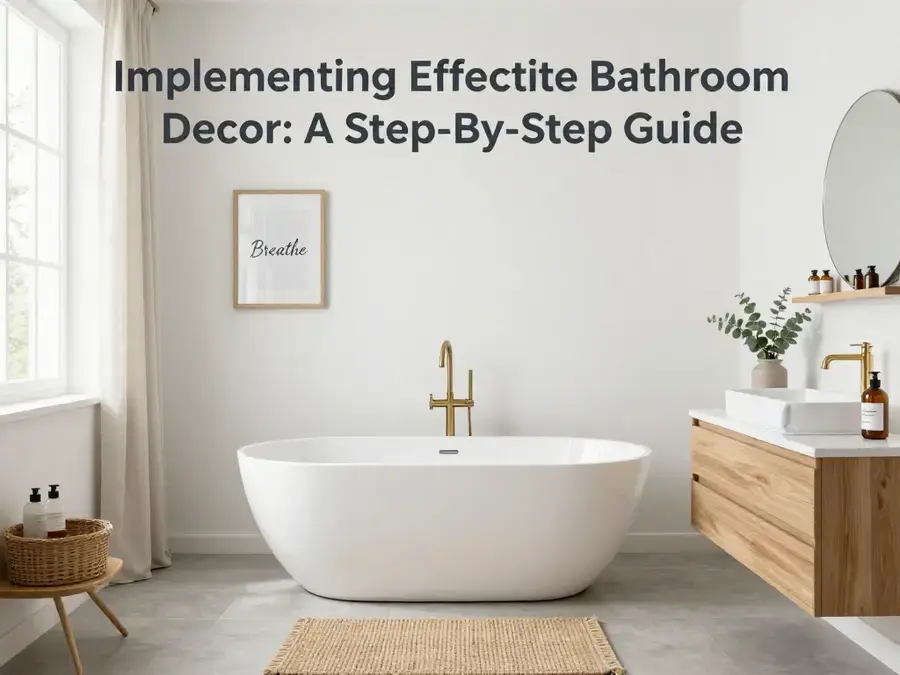

Many homeowners struggle with creating a bathroom that feels both functional and beautiful. You might love your home, but every time you step into your bathroom, something feels off. The space looks outdated, cramped, or simply boring. You’re not alone in this challenge. According to the National Association of Home Builders, bathrooms are the second most renovated room in American homes. Yet many people focus only on major renovations and miss simple decor changes that can transform their space. The right bathroom decor can make your daily routine more enjoyable and increase your home’s value. This step-by-step guide will show you exactly how to implement effective bathroom decor without breaking your budget. You’ll learn how to choose the right colors, lighting, and accessories for your space. We’ll compare different decor styles and help you find what works best for your bathroom size and layout. Whether you’re working with a tiny powder room or a spacious master bathroom, these proven strategies will help you create a space you actually want to spend time in. You don’t need to be an interior designer to get professional results. By the end of this article, you’ll have a clear action plan to transform your bathroom from functional to fabulous. We’ll walk through each decision point, from wall treatments to storage solutions. You’ll discover which decor elements deliver the biggest impact and which ones to avoid. Ready to turn your bathroom into a space that reflects your personal style while meeting your daily needs?
🏗️
📚 Table of Contents
H2: Planning Your Bathroom Decor Style and Budget
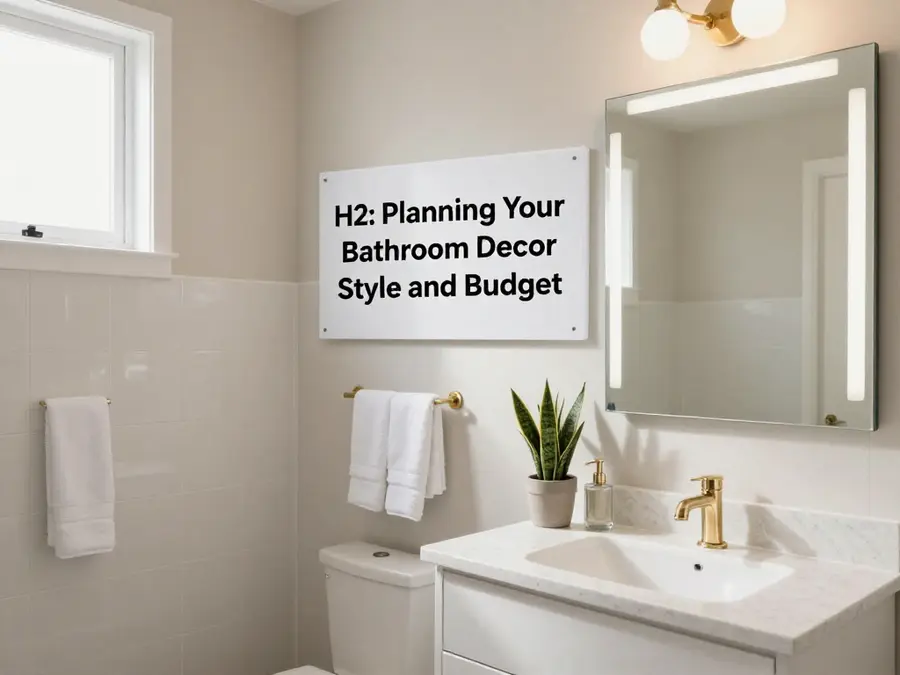
Smart planning saves money and prevents costly mistakes. Your style choice affects everything from paint colors to fixture selections.
Identifying Your Personal Style Preferences
Start by collecting images that inspire you. Pinterest boards and magazine clippings reveal patterns in your preferences. Notice if you gravitate toward clean lines or ornate details.
Popular bathroom styles each have distinct characteristics:
- Modern minimalist – Clean lines, neutral colors, floating vanities
- Farmhouse rustic – Shiplap walls, vintage fixtures, warm wood tones
- Spa-inspired – Natural materials, soft lighting, calming colors
- Traditional classic – Subway tiles, pedestal sinks, timeless finishes
Consider your home’s existing architecture. A Victorian house might clash with ultra-modern fixtures. Your chosen style should flow naturally with adjacent rooms.
Setting a Realistic Budget Range
Bathroom renovations typically cost $10,000 to $25,000 for mid-range projects. Decorative updates alone range from $500 to $3,000 depending on scope.
Break your budget into categories:
- Paint and wallpaper (15-20%)
- Fixtures and hardware (30-40%)
- Accessories and textiles (20-25%)
- Unexpected expenses buffer (15-20%)
High-impact, low-cost changes include new mirrors, lighting fixtures, and cabinet hardware. These updates can transform your space for under $800.
Prioritizing High-Impact Changes
Focus on elements that create the biggest visual difference first. Lighting upgrades dramatically improve any bathroom’s appearance and functionality.
Wall color ranks as the most affordable transformation. A fresh coat of paint costs under $100 but changes the entire room’s mood. Choose colors that complement your fixtures rather than fighting them.
New mirrors and vanity hardware provide instant style updates. These changes take minutes to install but deliver professional-looking results. Save major renovations for later phases when budget allows.
H2: Essential Bathroom Decor Elements That Make the Biggest Impact
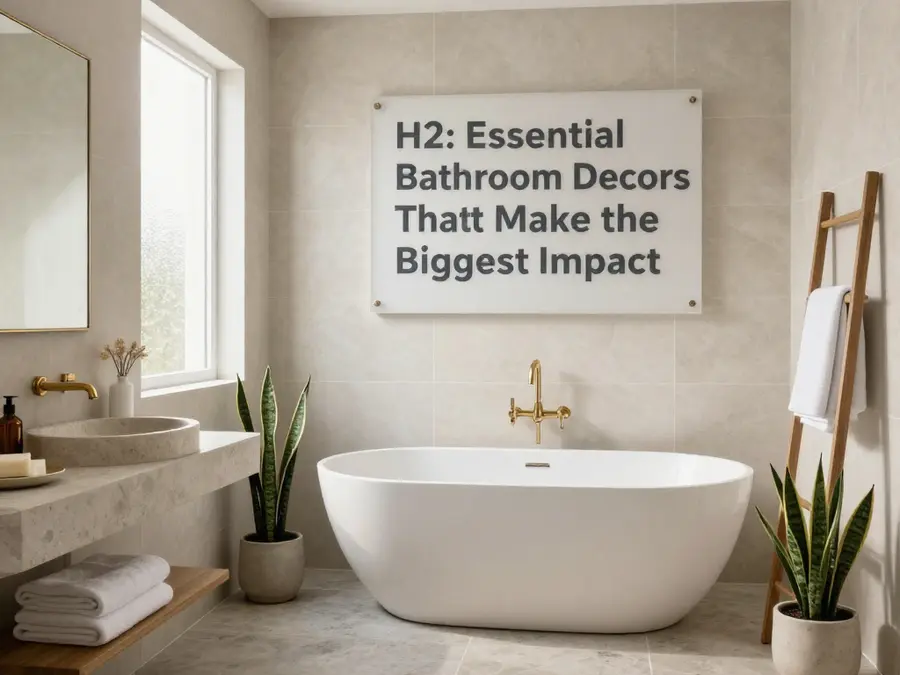
Small changes can transform your bathroom from ordinary to extraordinary. The right elements create visual impact without breaking your budget.
Lighting That Sets the Perfect Mood
Good lighting makes everything look better, including you. Harsh overhead lights create unflattering shadows and feel cold.
Layer different light sources for the best results:
- Vanity lighting – Install fixtures on both sides of mirrors to eliminate shadows
- Ambient lighting – Add a ceiling fixture or recessed lights for general illumination
- Accent lighting – Use LED strips under floating vanities or behind mirrors
Dimmer switches let you adjust brightness throughout the day. Warm white bulbs (2700K-3000K) create a spa-like atmosphere.
Statement Mirrors That Double Your Space
Mirrors reflect light and make small bathrooms feel twice as large. A well-chosen mirror becomes instant artwork.
Round mirrors soften angular spaces and add visual interest. Rectangular mirrors work best above double vanities. Oversized mirrors create drama and make ceilings appear higher.
Consider mirrors with built-in lighting or decorative frames. Black metal frames add modern appeal, while brass brings warmth.
Textiles and Hardware for Instant Personality
Soft textures balance hard bathroom surfaces. Quality towels, bath mats, and shower curtains add color and comfort.
Choose coordinating colors but vary the textures. A plush bath mat, waffle-weave towels, and linen shower curtain create visual depth.
Hardware updates provide the biggest bang for your buck. Swap basic chrome faucets and cabinet pulls for brushed gold or matte black finishes. This simple change makes everything look more expensive.
Add a small stool or ladder for towel storage. Plants like pothos or snake plants thrive in bathroom humidity.
H2: Step-by-Step Implementation Process for Maximum Results
Now that you understand the key principles, let’s walk through the actual process. These steps will help you transform your bathroom into a cohesive, stylish space.
### Planning Your Layout and Color Scheme
Start by measuring your bathroom and sketching a simple floor plan. Note where your fixtures, windows, and storage areas are located. This gives you a clear picture of what you’re working with.
Choose your color palette next. Pick one main color, one accent color, and one neutral. For example, navy blue as your main color, gold as accent, and white as neutral creates a classic look.
Consider your bathroom’s natural light when selecting colors. North-facing bathrooms benefit from warm tones like cream or soft yellow. South-facing spaces can handle cooler blues and grays beautifully.
### Selecting and Coordinating Key Elements
Pick your largest elements first, then work down to smaller details. Start with shower curtains or window treatments, then move to rugs and towels.
Follow the 60-30-10 rule for color distribution:
- 60% neutral colors (walls, large fixtures)
- 30% main color (towels, shower curtain)
- 10% accent color (soap dispensers, artwork)
Choose materials that complement each other. Mixing warm wood with cool metals creates visual interest. However, stick to two material families maximum to avoid chaos.
### Installation and Styling Timeline
Install permanent fixtures first, like towel bars and shelving. This prevents damage to your new decor items later.
Add textiles next – shower curtains, bath mats, and towels. These items have the biggest visual impact and set your room’s mood immediately.
Finish with accessories and plants. Place items in odd-numbered groups for better visual appeal. Three small candles look more intentional than two or four.
Step back and evaluate after each addition. Sometimes less really is more in small bathroom spaces.
H2: Budget-Friendly vs Premium Bathroom Decor Options
Your bathroom transformation doesn’t require breaking the bank. Smart shoppers can achieve stunning results with strategic choices and creative thinking.
Affordable Decor Solutions That Deliver Impact
Budget-friendly options focus on high-impact, low-cost changes that refresh your space instantly. Paint remains your best investment at $30-50 per gallon.
Peel-and-stick wallpaper creates dramatic accent walls for under $40. Vinyl options now mimic expensive materials like marble and wood grain perfectly.
- Thrift store mirrors in ornate frames ($10-25 each)
- DIY floating shelves using reclaimed wood ($15-30)
- Dollar store mason jars as stylish storage containers
- Fabric shower curtains instead of plastic ($20-40)
Mid-Range Options for Balanced Quality
The $200-800 range offers significant upgrades without premium pricing. Target and HomeGoods carry designer-inspired pieces at fraction costs.
Quality bath mats, coordinated towel sets, and ceramic accessories create cohesive looks. These investments last years with proper care.
Premium Choices for Luxury Appeal
High-end decor starts around $1,000 and delivers exceptional materials and craftsmanship. Marble accessories, custom artwork, and designer lighting fixtures define this category.
Premium options include heated towel racks ($300-600) and smart mirrors with built-in lighting ($400-1,200). These features add genuine value to your home.
Making Smart Investment Decisions
Focus your budget on items you’ll use daily. Splurge on quality towels and bath mats while saving on decorative accessories.
Mix price points strategically. Pair budget-friendly wall art with one premium statement piece. This approach creates visual interest without overspending.
H2: Common Bathroom Decor Mistakes and How to Avoid Them
Even experienced decorators make simple mistakes that can ruin a bathroom’s potential. These common errors are easy to spot once you know what to look for.
### Choosing the Wrong Scale and Proportions
Oversized vanities in small bathrooms create cramped, claustrophobic spaces. A 60-inch double vanity might look stunning in showrooms but overwhelms a 5×8 bathroom.
Tiny accessories get lost in large bathrooms too. That delicate soap dispenser disappears on a massive marble countertop. Scale everything to your room size for balanced proportions.
Measure twice, buy once. Your beautiful new mirror should cover about 75% of your vanity width for proper visual weight.
### Ignoring Lighting Layers
Single overhead lights create harsh shadows and unflattering reflections. You end up applying makeup in dim corners or shaving with poor visibility.
Smart bathrooms use three lighting types:
- Ambient lighting for overall illumination
- Task lighting around mirrors for grooming
- Accent lighting to highlight architectural features
Vanity lights should sit at eye level, not above the mirror. This eliminates unflattering shadows under your eyes and chin.
### Forgetting About Moisture and Ventilation
Beautiful wallpaper peels within months without proper ventilation. That gorgeous wooden stool warps from constant humidity exposure.
Moisture-resistant materials aren’t just suggestions in bathrooms. Choose semi-gloss or satin paint finishes that resist mold and clean easily. Skip flat paint completely.
Your exhaust fan should move air equal to your bathroom’s square footage. A 50-square-foot bathroom needs a 50 CFM fan minimum.
### Skipping Storage Planning
Cluttered countertops ruin even the most expensive finishes. Toiletries scattered everywhere make spaces feel chaotic and dirty.
Plan storage before choosing pretty accessories. Built-in niches, medicine cabinets, and drawer organizers keep essentials hidden but accessible. Every item needs a designated home for lasting organization.
Conclusion
Creating a beautiful bathroom doesn’t have to be overwhelming or expensive. The key is starting with a clear plan that matches your style and budget. Focus on the elements that make the biggest impact first. These include lighting, mirrors, and storage solutions that work for your space. Take your time with the implementation process. Small changes can create dramatic results when done thoughtfully. You don’t need to choose between budget-friendly and premium options exclusively. Mix affordable finds with a few quality pieces for the best value. Remember to avoid common mistakes like ignoring functionality or overcrowding your space. Your bathroom should feel calm and organized. Every item should have a purpose and a place. The most successful bathroom makeovers happen when you balance style with practicality. Consider how you actually use the space daily. Choose decor that enhances your routine rather than complicating it. Start with one small change today. Maybe it’s new towels or a fresh plant. Build from there as your vision becomes clearer. Your dream bathroom is closer than you think, and every step forward makes a difference in how you feel in this important space.