
Many homeowners struggle with creating a dining room that feels both welcoming and stylish. They often end up with spaces that feel disconnected from the rest of their home or lack the warmth needed for memorable family gatherings. Your dining room decor plays a crucial role in setting the mood for every meal and celebration. According to the National Association of Home Builders, 76% of homebuyers consider dining room design a key factor when choosing a home. This shows just how important this space really is. The right dining room decor does more than just look pretty. It creates an atmosphere where families want to spend time together. It also adds significant value to your home while reflecting your personal style. But choosing the perfect decor can feel overwhelming. Should you go modern or traditional? What colors work best? How do you balance comfort with elegance? These questions leave many people stuck, unable to move forward with their design plans. In this article, you’ll discover how to transform your dining space into a room that truly works for your lifestyle. We’ll compare different decor styles, from classic farmhouse to sleek contemporary designs. You’ll learn which approaches work best for different home types and family needs. We’ll also explore practical tips for choosing furniture, lighting, and accessories that create the perfect dining experience. By the end, you’ll have a clear roadmap for creating a dining room that brings people together and makes every meal special. Your dining room should be more than just a place to eat. It should be the heart of your home.
🏗️
📚 Table of Contents
-
1
What Makes Dining Room Decor Essential for Your Home -
2
Traditional vs. Modern Dining Room Decor Styles -
3
Key Elements That Define Great Dining Room Decor -
4
Budget-Friendly vs. High-End Dining Room Decor Options -
5
Small Dining Room vs. Large Dining Room Decor Strategies -
6
How to Choose the Perfect Dining Room Decor for Your Home
What Makes Dining Room Decor Essential for Your Home
Your dining room sets the stage for countless memories and daily moments. This space deserves thoughtful attention that goes beyond basic furniture placement.
### How Dining Room Decor Impacts Daily Life
Well-designed dining rooms encourage families to gather more often. Studies show that homes with inviting dining spaces see 40% more family meals compared to those with neglected areas.
The right decor creates a welcoming atmosphere for guests. A friend recently transformed her bland dining room with warm lighting and textured wall art. Now she hosts dinner parties monthly instead of ordering takeout.
Good dining room design also affects your mood during meals. Calming colors and comfortable seating help reduce stress after long workdays.
### The Financial Benefits of Strategic Dining Room Design
Real estate experts report that updated dining rooms add 3-5% to home value. This investment pays dividends when selling your property.
Smart decor choices extend furniture lifespan too. Quality table runners protect wood surfaces from scratches and heat damage. Proper lighting prevents eye strain during meals.
Budget-friendly updates deliver impressive results:
- Fresh paint costs under $50 but transforms the entire space
- New light fixtures create dramatic focal points for $100-300
- Seasonal centerpieces keep the room feeling current year-round
### Creating Functional Beauty in Your Dining Space
Effective dining room decor balances style with practicality. Your space should look beautiful while serving daily needs efficiently.
Consider traffic flow when placing decorative elements. Oversized artwork works well on walls away from serving areas. Storage solutions like buffets hide clutter while displaying favorite pieces.
Lighting layers make rooms more versatile. Combine overhead fixtures with table lamps for intimate dinners. Dimmer switches let you adjust brightness for different occasions.
Traditional vs. Modern Dining Room Decor Styles
Choosing between traditional and modern styles shapes your entire dining experience. Each approach creates a completely different atmosphere for family meals and entertaining guests.
What Defines Traditional Dining Room Style?
Traditional dining rooms embrace timeless elegance through rich wood furniture and classic patterns. Think mahogany tables, upholstered chairs with nail head trim, and crystal chandeliers that sparkle overhead.
Color palettes lean toward warm neutrals like cream, burgundy, and deep forest green. Fabrics feature damask, toile, or floral prints that add sophisticated texture to the space.
- Formal china cabinets displaying heirloom pieces
- Heavy drapery with valances and tiebacks
- Persian or Oriental rugs with intricate patterns
- Oil paintings in ornate gold frames
How Modern Design Transforms Dining Spaces
Modern dining rooms prioritize clean lines and functional beauty over ornate details. Glass tables, metal chairs, and geometric light fixtures create an uncluttered aesthetic.
The color scheme stays minimal with whites, grays, and bold accent colors. Materials like steel, concrete, and lacquered wood replace traditional carved elements.
- Floating shelves instead of bulky storage units
- Pendant lights with sleek metal or glass shades
- Abstract artwork in simple frames
- Solid-colored rugs with geometric patterns
Which Style Fits Your Lifestyle Best?
Traditional style works perfectly for formal entertaining and multi-generational homes. The sturdy furniture handles daily use while maintaining an elegant appearance for special occasions.
Modern design suits busy families who prefer easy maintenance and flexible spaces. The streamlined furniture moves easily and cleans quickly after messy family dinners.
Consider your hosting habits and daily routines when deciding. Traditional creates ceremony around meals, while modern emphasizes casual comfort and practicality.
Key Elements That Define Great Dining Room Decor
Creating a stunning dining room requires balancing several design elements that work together seamlessly. Each component plays a vital role in the overall atmosphere and functionality of your space.
Lighting That Sets the Perfect Mood
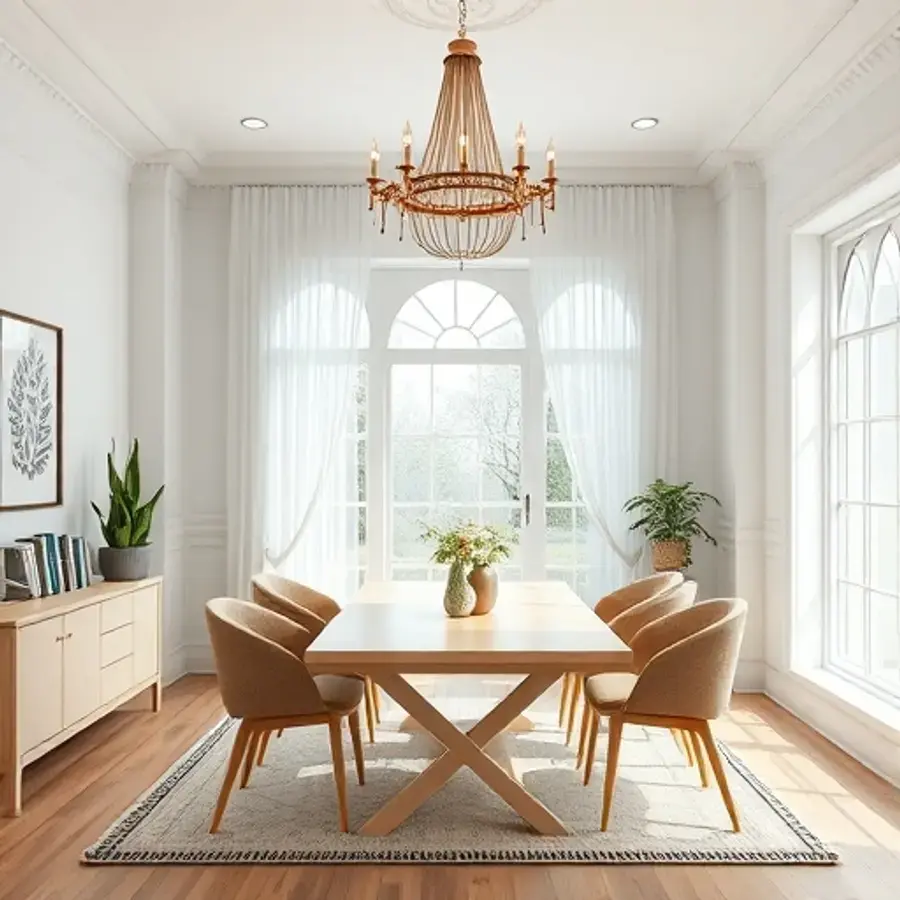
Your lighting choices can make or break the dining experience. A statement chandelier serves as both illumination and artwork above your table.
Layer different light sources for maximum impact:
- Ambient lighting from overhead fixtures creates general illumination
- Task lighting from buffet lamps helps with serving and cleanup
- Accent lighting from wall sconces highlights artwork or architectural features
- Candles add warmth and intimacy for special occasions
Install dimmer switches to adjust brightness throughout the day. Bright light works for family breakfast, while softer lighting creates romance for dinner parties.
Color Schemes That Enhance Appetite and Conversation
Warm colors like deep reds, golden yellows, and rich oranges naturally stimulate appetite. These hues create an inviting atmosphere that encourages lingering conversations.
Neutral palettes offer timeless elegance and versatility. Cream, beige, and soft grays provide a sophisticated backdrop for colorful table settings and seasonal decorations.
Bold accent walls can add drama without overwhelming the space. Consider deep navy, forest green, or burgundy on one wall while keeping others neutral.
Furniture Selection and Arrangement Principles
Your dining table should accommodate your household size plus two extra guests. Round tables encourage conversation, while rectangular tables work better in narrow rooms.
Chair comfort matters more than appearance for lengthy meals. Test seats before buying to ensure proper back support and cushioning.
Leave at least 36 inches between the table edge and walls for comfortable movement. This space allows people to pull out chairs and walk behind seated diners easily.
Budget-Friendly vs. High-End Dining Room Decor Options
Creating a stunning dining room doesn’t require breaking the bank. Smart shoppers can achieve elegant looks through strategic choices and creative alternatives.
Affordable Furniture and Decor Solutions
Thrift stores and estate sales offer hidden gems at fraction prices. A $50 vintage table can transform with simple refinishing techniques.
Big box retailers like IKEA and Target provide stylish pieces under $200. Their dining sets often mimic expensive designer looks without premium costs.
DIY projects stretch budgets further. Reupholstering old chairs costs $30 per seat versus $300 for new ones. Paint transforms outdated furniture into modern statement pieces.
- Facebook Marketplace for gently used furniture
- Clearance sections at major home stores
- Seasonal sales offering 40-70% discounts
- Rental furniture for temporary solutions
Luxury Investment Pieces Worth the Splurge
High-end dining tables from brands like West Elm start around $800. These pieces last decades and become family heirlooms.
Quality lighting fixtures dramatically impact room ambiance. A $400 chandelier creates more visual impact than multiple cheaper accessories combined.
Designer chairs from Herman Miller or CB2 offer superior comfort and durability. Their ergonomic designs support long dinner parties and daily use.
Smart Mixing Strategies for Every Budget
The high-low approach maximizes visual impact while controlling costs. Invest in one statement piece, then surround with budget finds.
Expensive artwork can anchor affordable furniture beautifully. A $300 original painting elevates a $150 dining set instantly.
- Splurge on lighting, save on accessories
- Invest in quality table, mix chair styles
- Choose expensive window treatments, budget furniture
- Buy designer rugs, affordable wall decor
Remember that personal style matters more than price tags. Thoughtful curation creates sophisticated spaces regardless of budget constraints.
Small Dining Room vs. Large Dining Room Decor Strategies
Your dining room’s size completely changes how you approach decorating. What works in a cozy breakfast nook will overwhelm a grand formal space.
Maximizing Small Dining Room Impact
Small spaces need strategic color choices to feel larger. Light neutrals like cream, soft gray, or pale blue reflect light and open up the room. Dark colors make walls feel closer, which can work if you want an intimate bistro vibe.
Choose furniture that serves multiple purposes. A round pedestal table takes up less visual space than a rectangular one with four legs. Benches slide completely under the table when not in use.
- Use mirrors to reflect light and create depth
- Mount floating shelves instead of bulky cabinets
- Choose chairs with open backs or clear acrylic materials
- Keep window treatments minimal to maximize natural light
Filling Large Dining Room Spaces
Big dining rooms can feel cold and empty without proper planning. You need substantial furniture pieces to anchor the space. A large table with eight chairs creates a natural focal point.
Layer different lighting sources to avoid the “airport terminal” effect. Combine a statement chandelier with wall sconces and table lamps. This creates warm zones within the larger space.
- Add a large area rug to define the dining zone
- Use bold artwork or an accent wall for visual weight
- Include a sideboard or buffet for storage and display
- Consider multiple seating areas for different occasions
Scale and Proportion Guidelines
Your chandelier should be one-third the width of your dining table. In small rooms, this might mean choosing a pendant light instead of a traditional chandelier.
Large rooms can handle oversized art pieces and dramatic window treatments. Small spaces work better with several smaller art pieces arranged in a gallery wall.
How to Choose the Perfect Dining Room Decor for Your Home
Your dining room should reflect your personality while creating a welcoming space for family and friends. The right decor choices can transform an ordinary room into your home’s centerpiece.
Assess Your Space and Lifestyle Needs
Start by measuring your dining room dimensions and noting architectural features. High ceilings work well with dramatic chandeliers, while low ceilings need flush-mount fixtures.
Consider how you actually use the space. Families with young children might choose durable fabrics and easy-to-clean surfaces. Formal entertainers can invest in delicate materials and statement pieces.
Create a Cohesive Color Palette
Pick a main color that flows from your adjacent rooms. Neutral bases like warm gray or cream provide flexibility for seasonal changes.
Add personality through accent colors in artwork, table linens, or chair cushions. The 60-30-10 rule works perfectly here: 60% neutral, 30% secondary color, 10% bold accent.
Balance Function with Visual Appeal
Your dining table should allow 24 inches of space per person. Leave at least 36 inches between the table and walls for comfortable movement.
Layer your lighting for different moods:
- Overhead fixtures for general illumination
- Table lamps or sconces for ambient lighting
- Candles for intimate dinner settings
Add Personal Touches That Tell Your Story
Display meaningful artwork or family photos at eye level. A gallery wall creates visual interest without overwhelming the space.
Fresh flowers or plants bring life to the room. A simple centerpiece like eucalyptus in a ceramic vase adds natural beauty year-round.
Remember that less is often more. Choose a few quality pieces rather than filling every surface with decorative items.
Conclusion
Creating the perfect dining room decor transforms your space into more than just a place to eat. It becomes the heart of your home where memories are made. Whether you choose traditional elegance or modern simplicity, the right decor reflects your personality and lifestyle. The key elements we explored work together to create harmony. Lighting sets the mood while furniture provides function and style. Colors and textures add warmth and character to your space. These pieces don’t need to break your budget to make a big impact. Size doesn’t limit your decorating potential. Small spaces can feel cozy and intimate with smart choices. Large rooms offer endless possibilities for grand statements. Both can achieve stunning results with the right approach. Remember that great dining room decor balances beauty with practicality. Your space should welcome guests while serving your daily needs. Mix high-end pieces with budget finds to create a unique look. Trust your instincts when making final decisions. Your dining room should tell your story through every carefully chosen detail. When you walk into your finished space, you’ll know you’ve created something truly special that brings joy to every meal shared there.