
Many people struggle with arranging their living room decor in a way that feels both comfortable and stylish. It’s common to feel overwhelmed by the choices, unsure of how to make a space inviting while reflecting personal style. This article delves into the science of living room decor, offering principles for effective design that can transform any space into a harmonious retreat. You will learn how to balance aesthetics with functionality, ensuring that your living room is not only beautiful but also practical. By understanding key design principles, such as color theory and spatial arrangement, you can make informed decisions that elevate your home environment. For example, did you know that 76% of people feel more relaxed in rooms with colors that complement each other? This kind of insight can guide your choices, making the process less daunting. Our expertise in interior design and home decor will guide you through the process, providing a clear comparison of different styles and techniques. Whether you’re drawn to a modern minimalist look or a cozy traditional feel, this article will help you understand the principles that make each style work. You’ll also discover how small changes, like adjusting lighting or rearranging furniture, can have a big impact on the overall feel of your room. By the end of this article, you’ll have the tools and confidence to create a living space that not only looks great but also enhances your quality of life. With these science-backed strategies, you can turn your living room into a space that feels just right for you and your family.
🏗️
📚 Table of Contents
Introduction to Living Room Decor
Imagine stepping into a room that feels just right. That’s the magic of thoughtful decor. Your living room is the heart of your home.
It’s where you relax, entertain, and spend time with family. A well-decorated space can make all the difference.
What are the key elements of living room decor?
Several elements come together to create a cohesive look. Start with furniture. Choose pieces that fit your space and style.
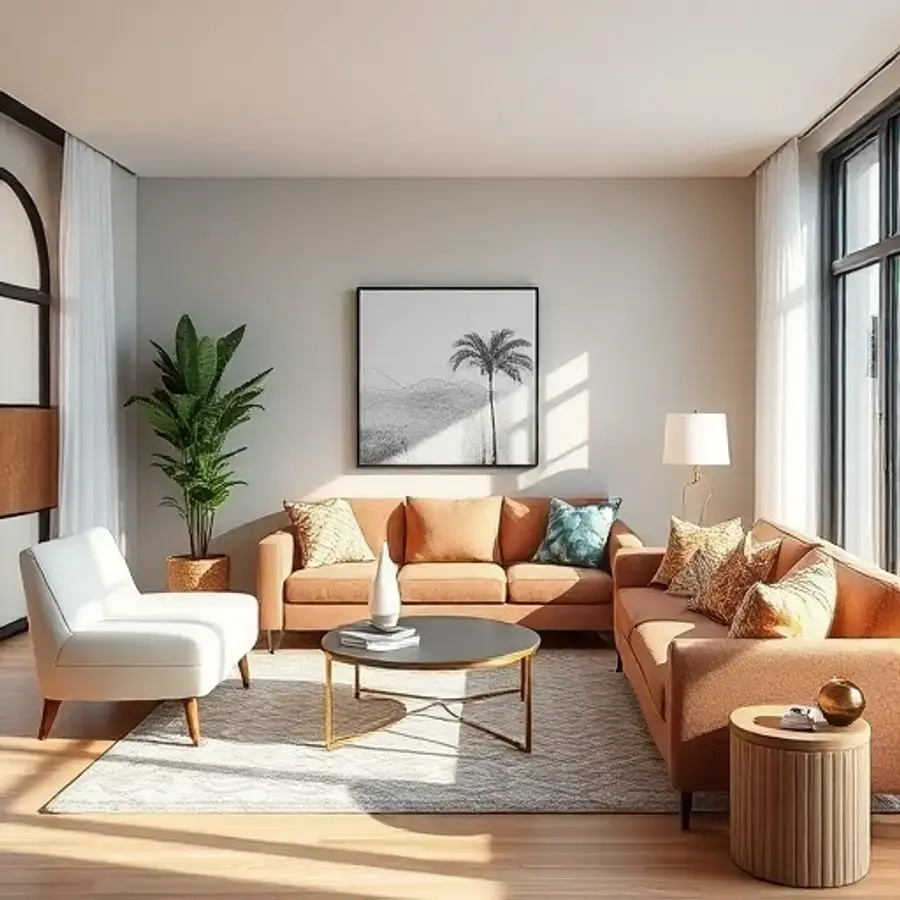
Consider a comfortable sofa, a stylish coffee table, and a few accent chairs. Next, think about color schemes. Neutral tones offer a calm backdrop, while bold colors add energy.
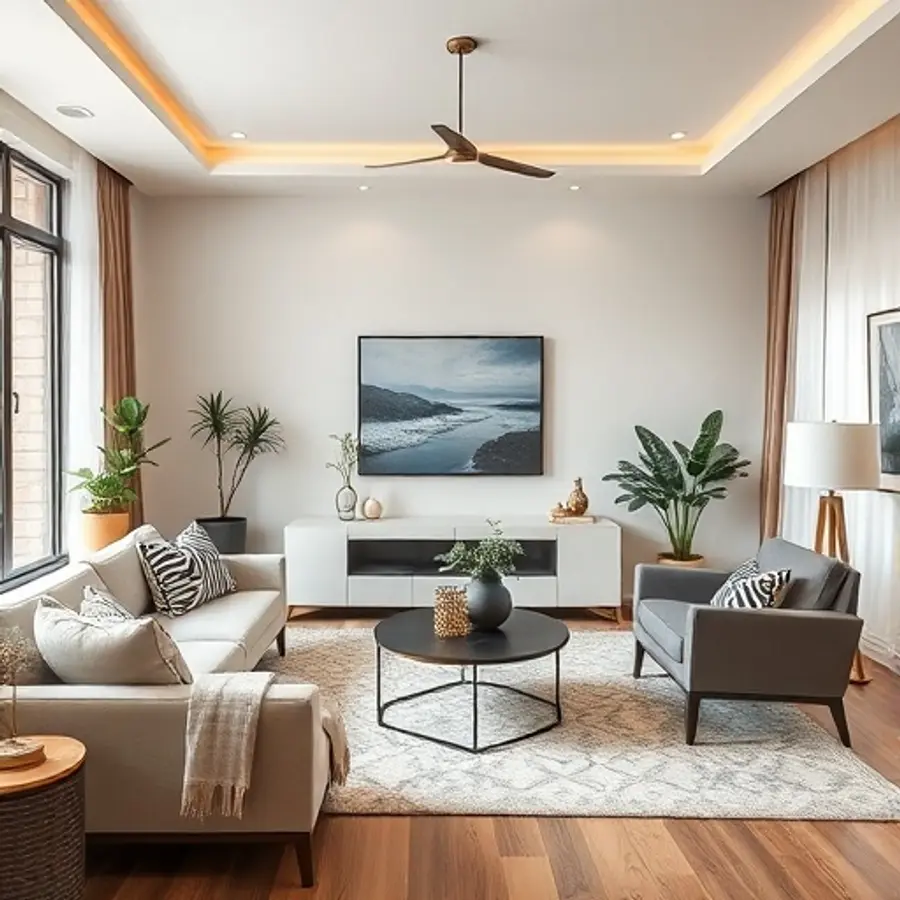
Finally, don’t forget about lighting. A mix of overhead lights, lamps, and natural light can create a warm atmosphere.
How can you personalize your living room?
Personal touches make your living room unique. Display family photos or artwork that speaks to you. Add decorative pillows and throws in your favorite patterns or colors.
Consider a rug to tie the room together. Plants can also add life and color. Choose easy-to-care-for options like succulents or ferns.
What are some common mistakes to avoid?
Avoid overcrowding your space with too much furniture. This can make the room feel cramped. Instead, focus on a few key pieces.
Also, be mindful of scale. Large furniture in a small room can overwhelm the space. Another mistake is ignoring lighting.
Proper lighting can highlight your decor and create a cozy feel. Lastly, don’t forget about functionality. Ensure there’s enough seating and storage for your needs.
How can you update your living room on a budget?
Updating your living room doesn’t have to be expensive. Start with small changes. Swap out throw pillows or curtains for a fresh look.
Rearrange your furniture for a new layout. Add a gallery wall with affordable prints or DIY art. Consider painting an accent wall for a pop of color.
These changes can make a big impact without breaking the bank.
Color Theory in Living Room Decor
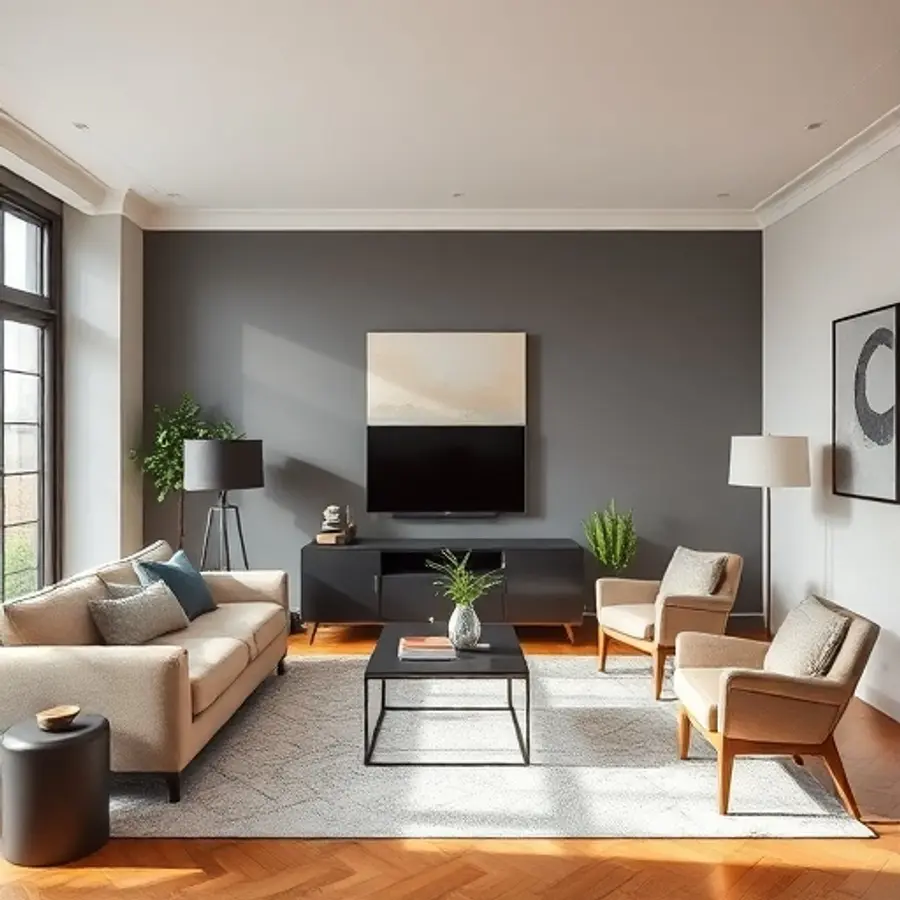
Understanding how colors work together can transform your living room into a cozy haven. Colors can set the mood and create harmony in your space.
How Do Colors Affect Mood?
Colors can influence how we feel. For example, warm colors like red and orange can make a room feel lively and inviting. On the other hand, cool colors such as blue and green often create a calming effect.
Think about how you want your living room to feel and choose colors that match that mood.
What Are Complementary Colors?
Complementary colors are opposite each other on the color wheel. They create a vibrant look when used together. For instance, pairing blue and orange can make your living room pop.
Use one color as the main shade and the other for accents, like pillows or artwork.
How Can You Use Neutral Colors Effectively?
Neutral colors like beige, gray, and white provide a versatile backdrop. They allow you to add colorful accents without overwhelming the space. For example, a neutral sofa can be paired with colorful cushions or a bright rug.
This approach makes it easy to update your decor with seasonal changes.
What Is the 60-30-10 Rule?
This rule helps balance colors in a room. Use 60% of a dominant color, 30% of a secondary color, and 10% for accents. For instance, if your walls are a soft gray, you might choose navy for furniture and mustard yellow for accents.
This creates a cohesive and visually appealing look.
Furniture Arrangement Principles
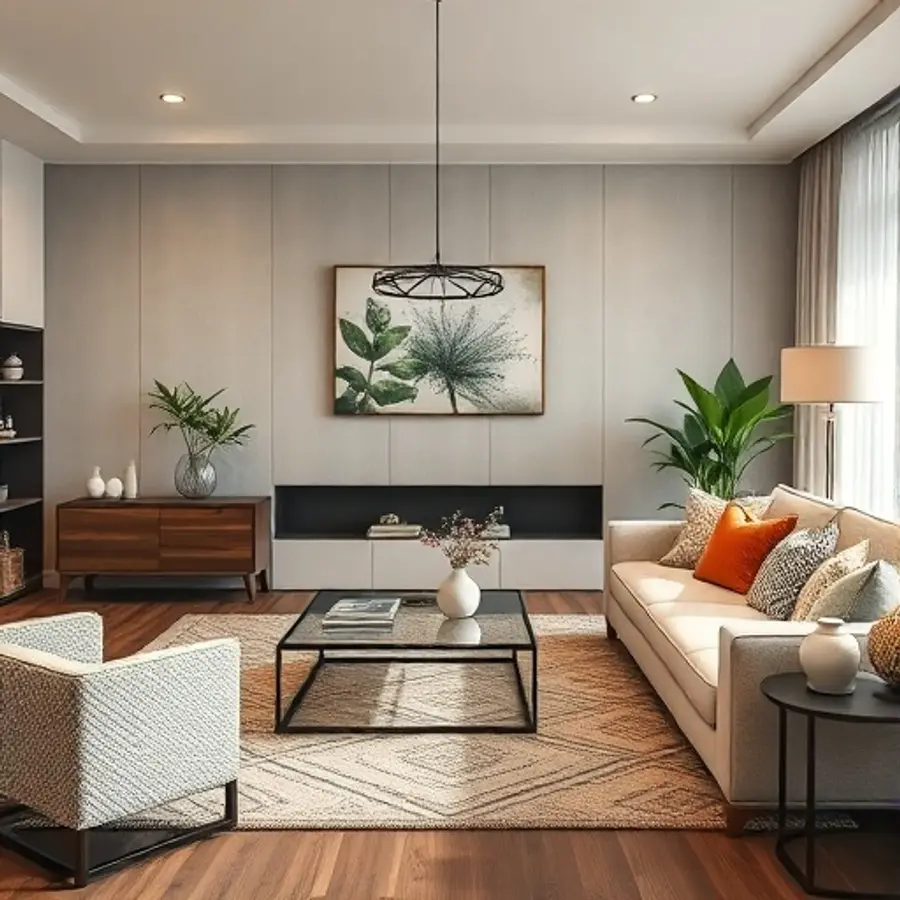
Arranging furniture in your living room can transform the space. It sets the tone for comfort and functionality. Let’s explore some key principles to guide your design choices.
How can you create a focal point?
Every living room benefits from a strong focal point. This could be a fireplace, a large window, or a piece of art. Arrange your seating to face this feature.
For example, if you have a fireplace, position the sofa directly across from it. This draws attention and creates a natural gathering spot.
What is the importance of traffic flow?
Ensuring smooth traffic flow is crucial. You want people to move easily through the room without obstacles. Leave at least 18 inches between coffee tables and sofas.
This gives enough space for movement. Consider pathways from the entry to seating areas. Avoid placing furniture where it blocks doorways or windows.
How do you balance furniture sizes?
Balance is key in furniture arrangement. Mix large and small pieces to create harmony. For instance, pair a large sectional with a small side table.
This prevents the room from feeling overcrowded. Use rugs to define areas and tie different sizes together.
Why is scale important in furniture arrangement?
Scale refers to the size of furniture in relation to the room. A large sofa in a small room can overwhelm the space. Conversely, tiny chairs in a large room may feel lost.
Measure your room and furniture before purchasing. This ensures everything fits well and maintains the room’s proportions.
Lighting Strategies for Living Rooms

Creating the right lighting in your living room can transform the space. It sets the mood and enhances your decor.
How can layered lighting enhance your living room?
Layered lighting combines different light sources. This approach provides flexibility and depth. Use a mix of ambient, task, and accent lighting.
For example, a central chandelier offers ambient light. Table lamps or floor lamps focus on specific areas for tasks like reading. Accent lights highlight art or architectural features.
What role do dimmers play in living room lighting?
Dimmers allow you to adjust the light intensity. This feature is crucial for creating different moods. For instance, bright settings are perfect for gatherings.
Lower light levels create a cozy atmosphere for movie nights. Installing dimmers is a simple way to enhance your living room’s versatility.
Which light bulb types are best for living rooms?
Choosing the right bulb affects both light quality and energy use. LED bulbs are popular for their efficiency and long life. They come in various color temperatures.
Warm white bulbs (around 2700K) are ideal for a cozy feel. Cooler temperatures suit modern or minimalist designs.
How can natural light be maximized in a living room?
Natural light can brighten your living room and save energy. Use sheer curtains to let in daylight while maintaining privacy. Arrange mirrors to reflect light around the room.
Keep windows clean and free from obstructions. These strategies enhance natural light, making your space feel open and inviting.
Accessorizing for Personality and Style
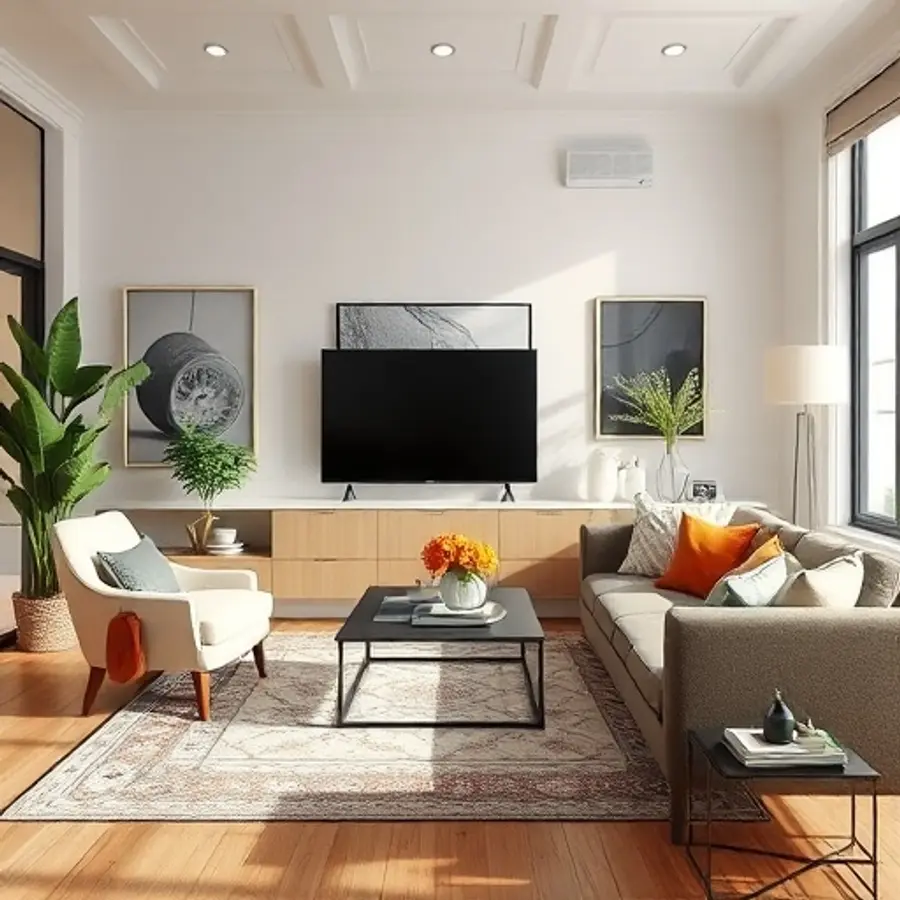
Adding personal touches to your living room can transform it into a unique space. Accessories play a crucial role in reflecting your personality and style.
How Can You Use Color to Express Personality?
Colors can greatly impact the mood of your living room. Choose colors that resonate with your personality. For example, if you love nature, consider shades of green or earth tones.
If you prefer a vibrant atmosphere, opt for bold colors like red or orange. Mixing and matching colors can also add depth and interest.
What Role Do Textiles Play in Decor?
Textiles like cushions, throws, and rugs can add warmth and texture. Consider using a variety of fabrics to create layers. For instance, a soft wool throw can complement a leather sofa.
Patterns and textures can reflect your style, whether it’s modern, rustic, or eclectic. Don’t be afraid to mix different textiles for a cozy feel.
How Can Art Pieces Enhance Your Living Room?
Art can be a focal point in your living room. Choose pieces that speak to you personally. Whether it’s a large painting or a collection of smaller prints, art can convey your taste and interests.
Consider supporting local artists by purchasing unique pieces that add character to your space.
What Are Some Unique Accessories to Consider?
Unique accessories can make your living room stand out. Consider items like vintage vases, handmade pottery, or quirky sculptures. These pieces can serve as conversation starters.
Personal mementos, like travel souvenirs, can also add a personal touch. Displaying these items can make your space feel more inviting and reflective of who you are.
Conclusion and Design Recommendations
After exploring various aspects of living room decor, it’s time to bring everything together. Creating a cohesive and inviting space requires thoughtful design choices.
How can you balance style and functionality?
Balancing style and functionality is key in living room decor. Start by selecting furniture that serves multiple purposes. For instance, choose a coffee table with storage or a sofa bed.
This ensures you have both a stylish and practical space.
What color schemes work best for living rooms?
Choosing the right color scheme can transform your living room. Neutral tones like beige or gray provide a versatile backdrop. They allow you to add pops of color with accessories.
Consider using bold colors like teal or mustard for accent walls or cushions. This creates visual interest without overwhelming the space.
How do you incorporate personal touches?
Adding personal touches makes your living room feel unique. Display family photos in stylish frames or showcase a collection of travel souvenirs. These elements tell your story and make the space truly yours.
Consider using a mix of textures, like a soft throw blanket or a woven rug, to add depth.
What lighting options enhance a living room?
Lighting plays a crucial role in setting the mood. Layered lighting, such as a combination of floor lamps, table lamps, and overhead fixtures, offers flexibility. Use dimmers to adjust the ambiance for different occasions.
For example, soft lighting is perfect for a cozy evening, while brighter lights suit social gatherings.
By focusing on these design recommendations, you can create a living room that is both beautiful and functional. Remember, the best spaces reflect your personality and adapt to your lifestyle. With these tips, your living room will be a welcoming retreat for family and friends alike.
Conclusion
In wrapping up our exploration of living room decor, it’s clear that creating a welcoming and stylish space involves several key elements. Understanding color theory can transform your living room into a harmonious retreat. Choosing the right colors can influence mood and perception, making the space feel either cozy or spacious. Furniture arrangement is equally important. It should promote conversation and comfort while ensuring easy movement. Lighting plays a crucial role, too. The right lighting can highlight features and create the desired ambiance, whether it’s bright and energizing or soft and relaxing. Accessorizing allows you to inject personality into your living room. This is where you can let your style shine through with art, textiles, and unique pieces that tell your story. Each element, from color to accessories, should work together to create a cohesive and inviting environment. Ultimately, your living room should reflect who you are and how you want to live. By thoughtfully combining these elements, you can design a space that is not only functional but also a true reflection of your personal style. So, take these insights and transform your living room into a space that you and your guests will love.